
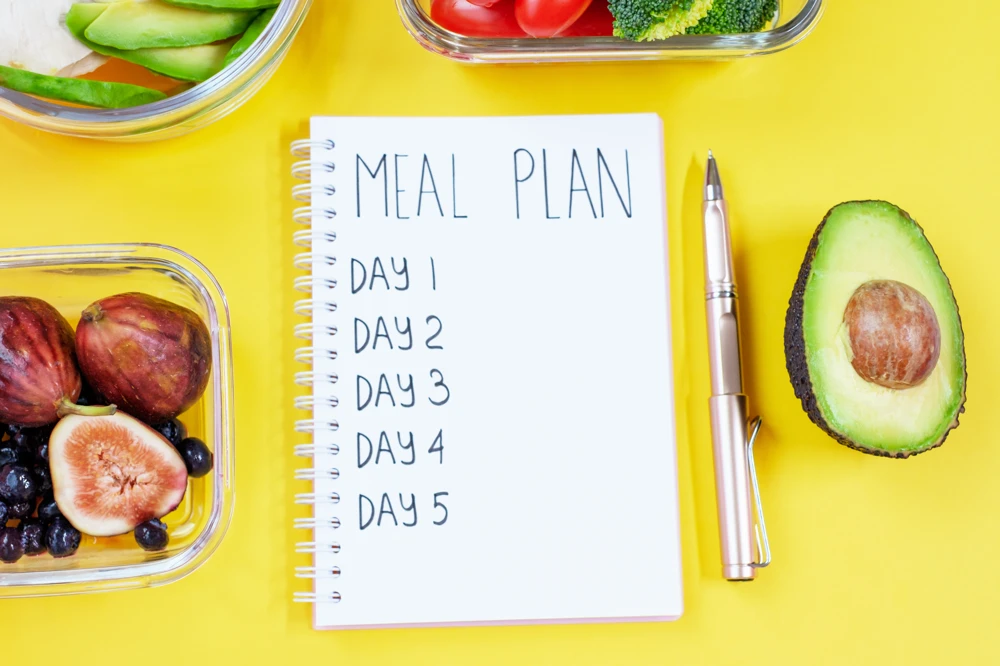
Meal planning means deciding what you'll eat before you need to cook it. Most people plan a week at a time. This saves money, reduces stress, and helps you eat better.
If you've stared at your fridge at 5pm with no idea what to make, meal planning solves that problem.
Why Meal Plan?
You'll save money. When you plan meals, you buy only what you need. The average family throws away $1,800 worth of food each year. Planning prevents waste.
You'll save time. Spend 5 minutes planning on Sunday instead of 10 minutes every night deciding what to cook, without the required ingredients.
You'll eat healthier. When you plan ahead, you make intentional choices. When you don't plan, you default to takeout or whatever's easiest.
Start Simple
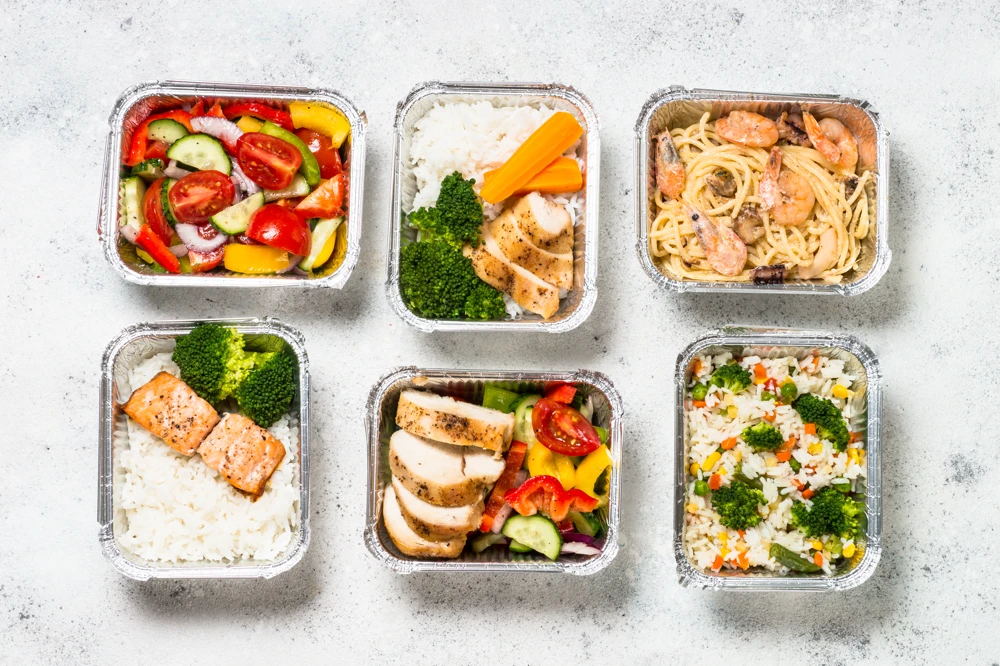
Don't plan every meal for the entire week. Start with just dinners. Plan 5 dinners and leave room for leftovers or takeout.
Use meals you already know how to cook. Your first meal plan shouldn't include 7 new recipes from Pinterest. Stick with what you know. Save experiments for later.
Pick Your Planning Day
Choose one day each week to plan meals. Most people choose Sunday. Put it on your calendar. Block 10 minutes.
Planning on the same day each week creates a habit. You shop before the week starts and you're ready to cook.
Check What You Have
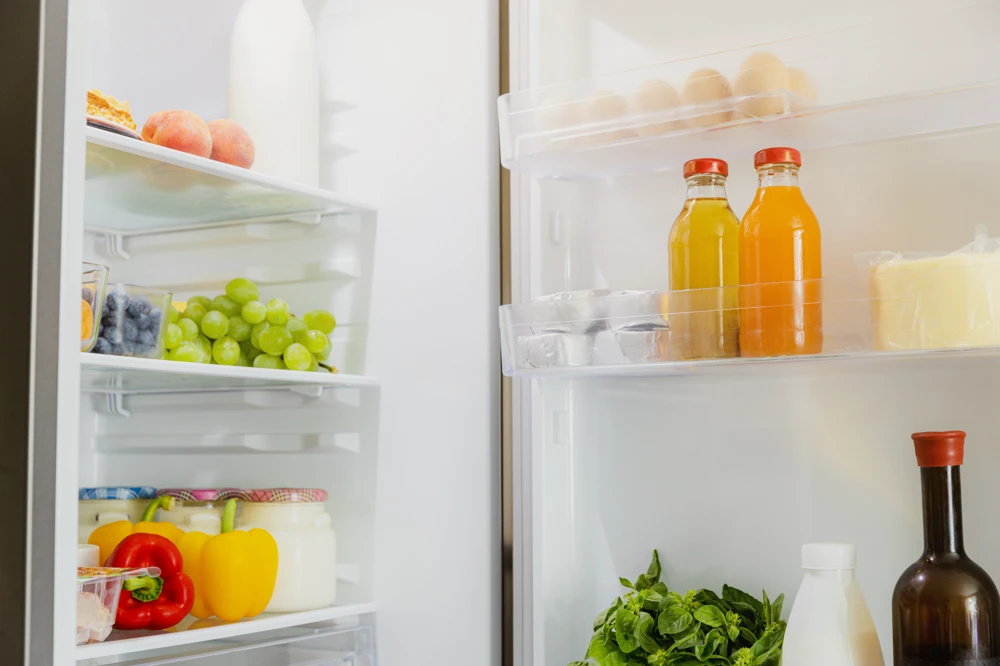
Before you plan meals, look in your fridge, freezer, and pantry.
What meat is in the freezer? What vegetables need to be used? What grains and pasta do you have?
If you have chicken in the freezer and broccoli in the fridge, plan chicken and broccoli. If you have ground beef and pasta, plan spaghetti.
This saves money and prevents waste.
Choose Your Meals
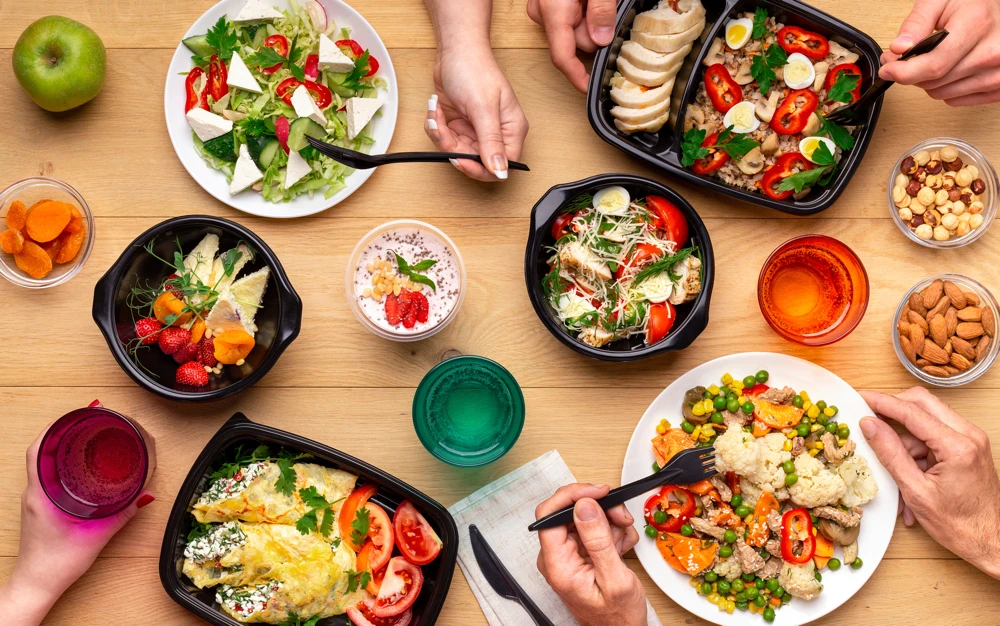
You need a method for choosing what to cook.
Method 1: The Favorites List
Write down 15 to 20 meals your family already eats. When you plan each week, pick 5 to 7 from this list.
Method 2: Theme Nights
Assign themes to each night of the week.
Monday: Meatless (pasta, beans, eggs)
Tuesday: Taco Tuesday
Wednesday: One pot meals (soups, stir fries)
Thursday: Chicken night
Friday: Takeout or pizza
Saturday: Leftovers
Sunday: Slow cooker meal
Themes narrow your choices. Instead of "what should I make?" you ask "what chicken dish should I make?"
Method 3: Mix and Match
Pick a protein, a vegetable, and a starch for each meal.
Grilled chicken, roasted broccoli, brown rice. Next night: ground beef, bell peppers, tortillas for fajitas.
Choose the method that feels easiest.
Write It Down
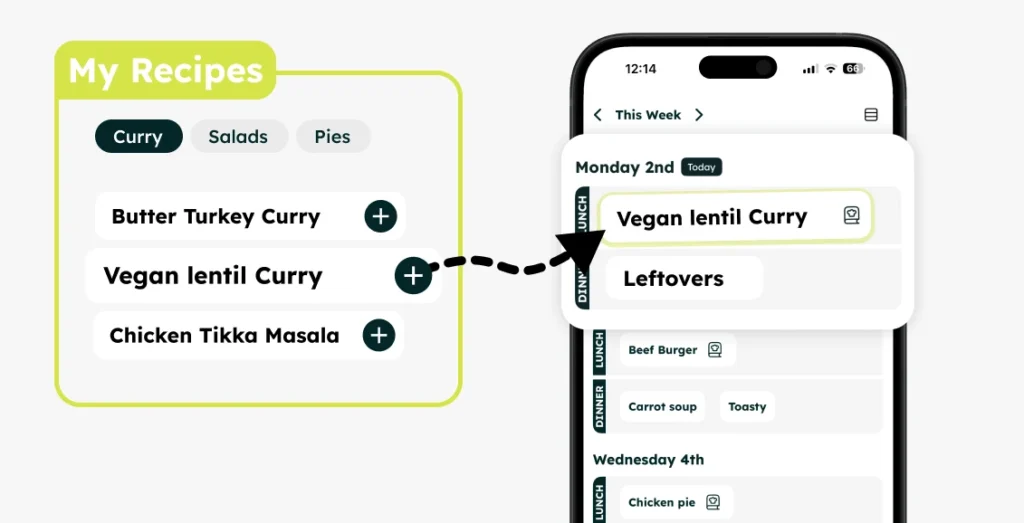
Don't keep your meal plan in your head. Write it on paper and stick it to your fridge. Use a whiteboard. Put it in your phone. Use a meal planning app.
When you're tired at 5pm, you can look at your plan instead of making a decision.
Make Your Grocery List
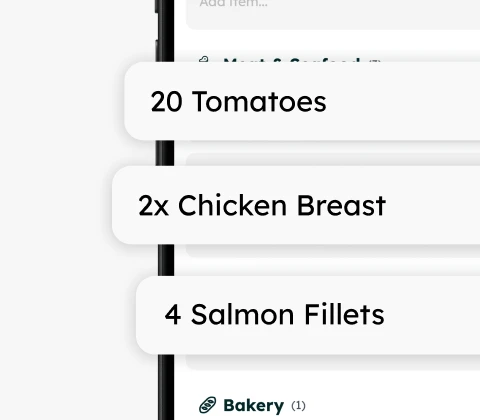
Go through each meal you planned and write down what you need.
Monday's spaghetti needs: ground beef, pasta, sauce, parmesan, salad greens.
Check what you already have. Cross off items in your pantry. If you have pasta and sauce, you only need meat, cheese, and greens.
Add breakfast foods, lunch items, and snacks to your list.
Organize your list by store section: produce, meat, dairy, pantry, frozen. This makes shopping faster.
Shop Once Per Week
Take your list to the store. Buy only what's on your list.
Don't shop when you're hungry. Hungry shopping leads to impulse buys.
If you see a great sale on something you use regularly, adjust your meal plan. Chicken on sale? Swap it for the beef you planned.
Prep (Optional)
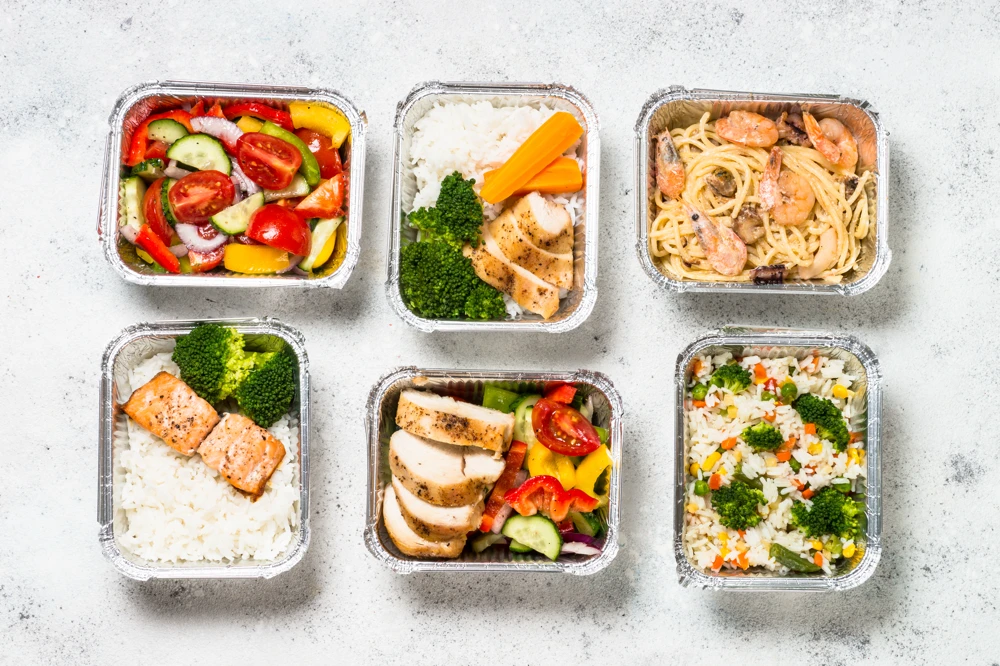
You don't have to cook everything on Sunday. But small prep tasks make weeknight cooking easier.
Wash and chop vegetables. Marinate meat for tomorrow. Cook a batch of soup. Brown ground beef for multiple meals.
If you have a few minutes on Sunday, this helps. If you don't, skip it.
Common Mistakes
- Planning too many new recipes. Use mostly familiar meals. Try one new recipe per week at most.
- Planning hard meals on busy nights. Save complicated cooking for weekends. Weeknights need simple food.
- Not checking your calendar. Look at your week before planning. Late meeting Tuesday? Plan leftovers or a slow cooker meal.
- Being too rigid. Your meal plan serves you. You don't serve your meal plan. Change it when you need to.
Tools That Help
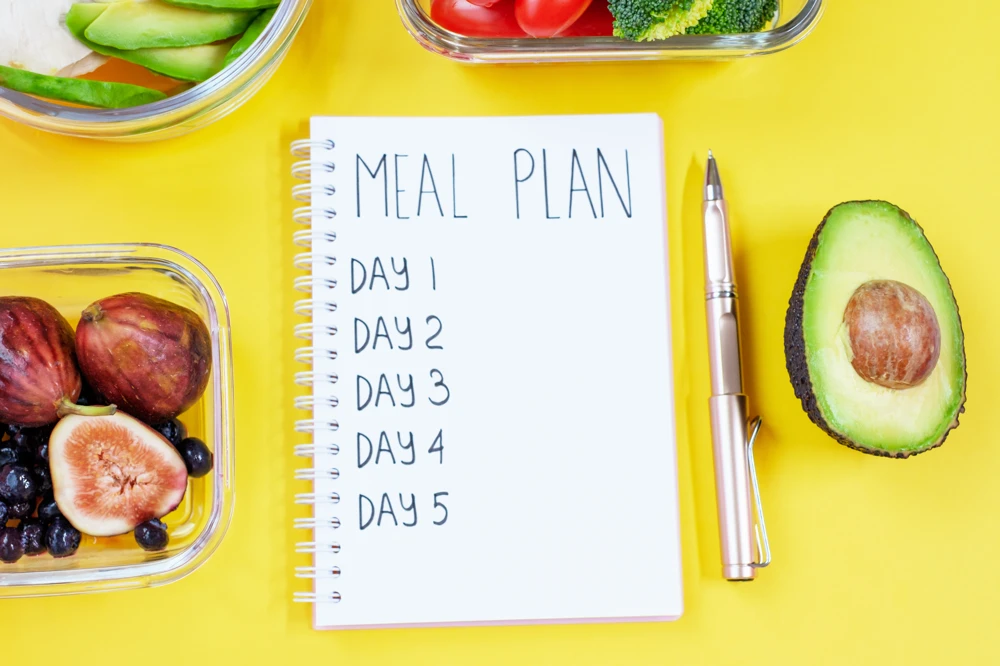
A whiteboard on your fridge shows everyone what's for dinner.
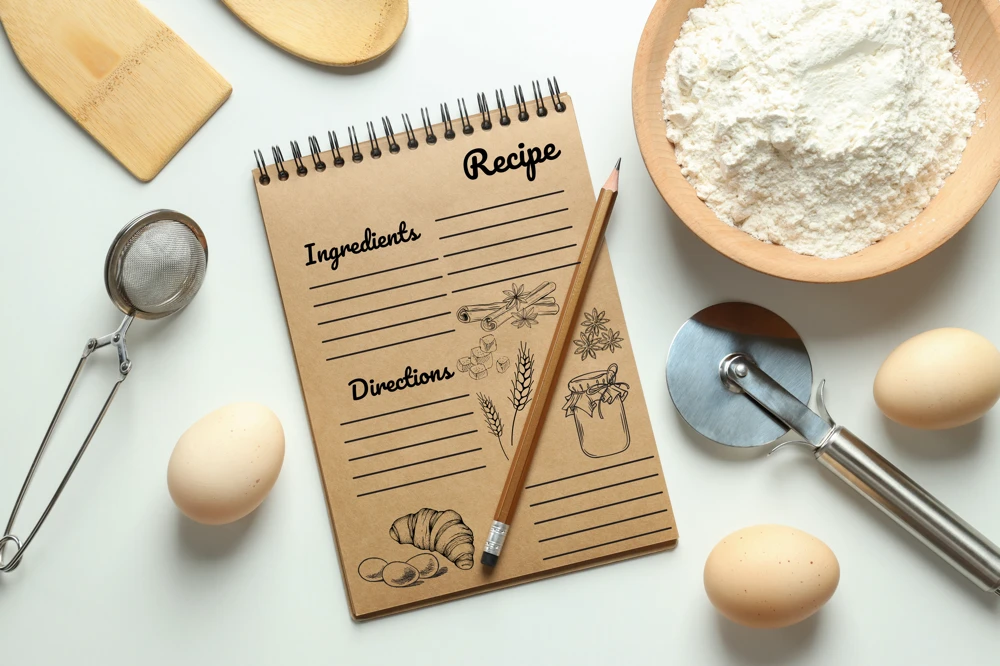
A recipe binder or box holds your favorite recipes in one place.
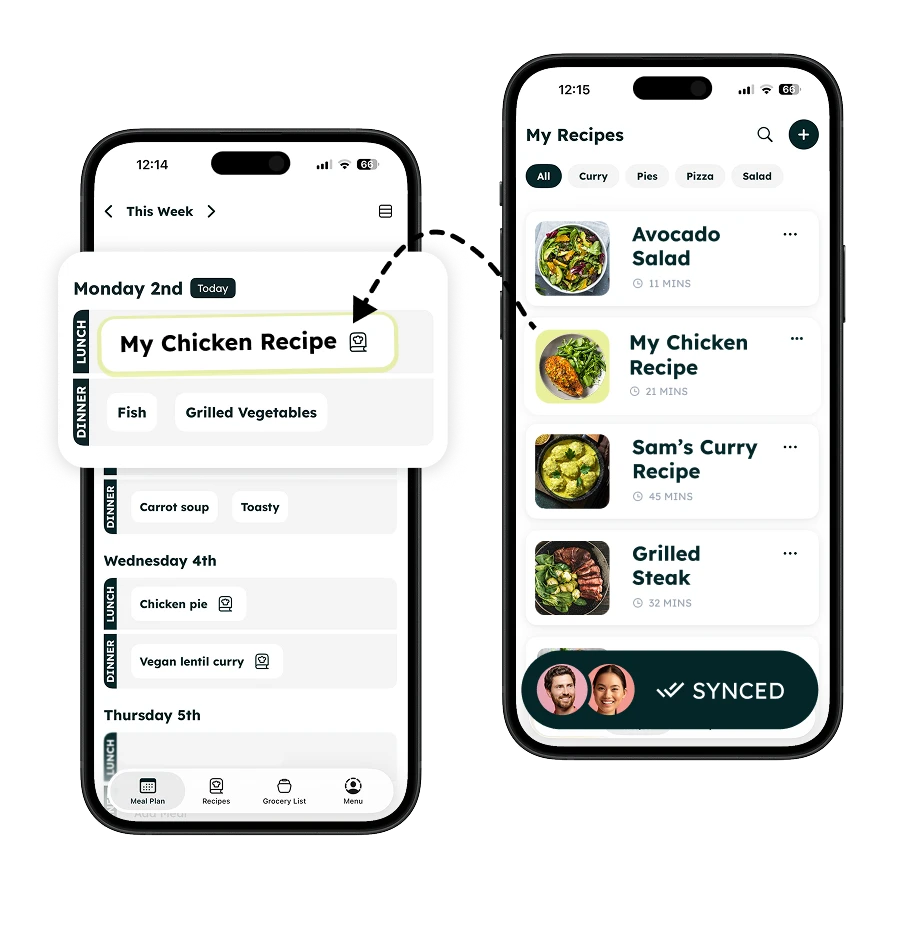
A meal planning app saves recipes, builds meal plans, and creates grocery lists. MealJar does all three. You can save recipes from websites, photos, or PDFs. Drag them into your week. It also syncs with all your family.
Getting Better Over Week
Meal planning is a skill. Week one might feel hard but week eight will feel natural and take less than a few minutes. Keep going. It gets easier.